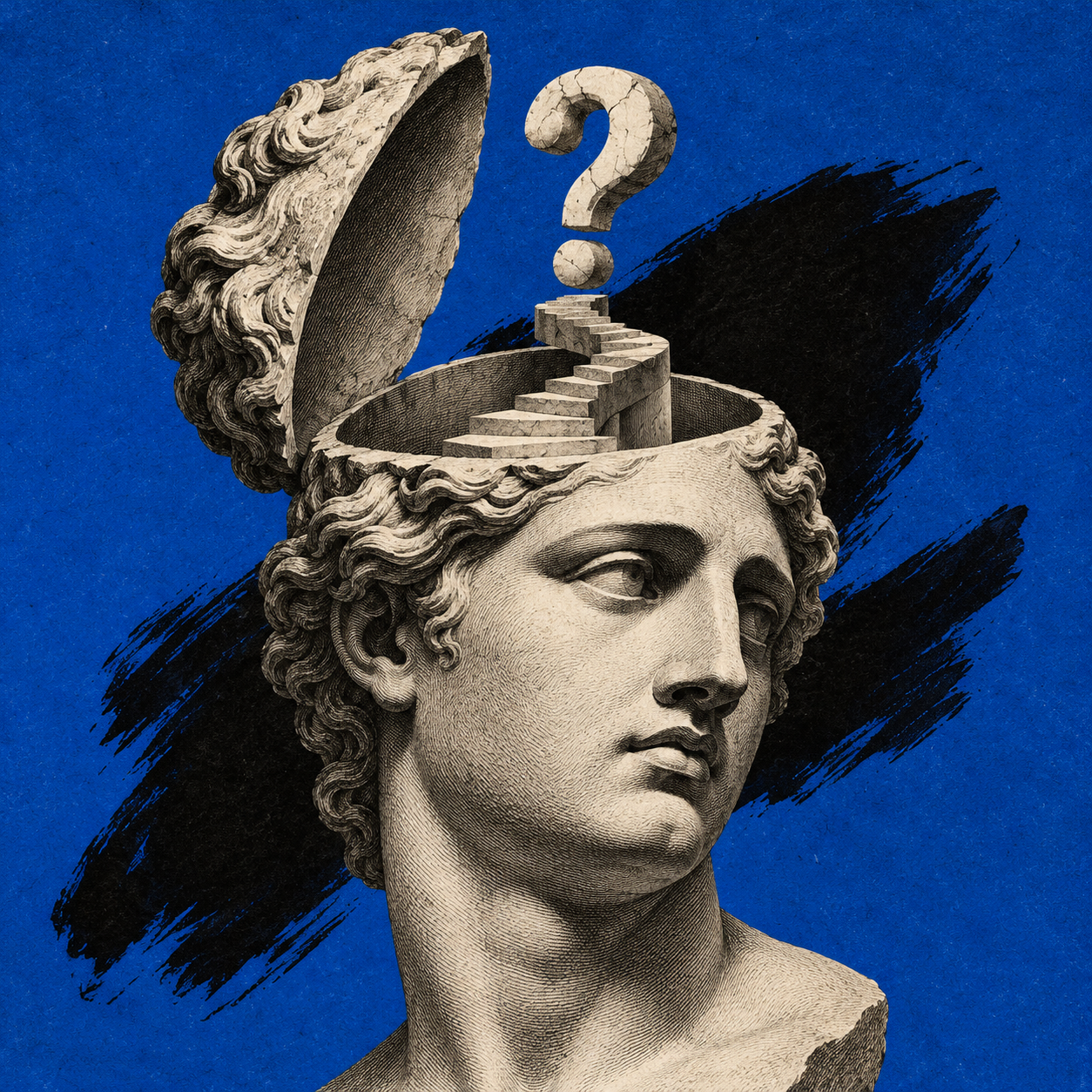
A blank page used to ask something of us before it gave anything back. We had to choose a direction, find a first sentence, and tolerate the awkward distance between an idea and its expression.
Now we can begin with a reply. Ask an AI system for ten angles, a tidy outline, or an opening paragraph, and the page fills. That can be useful. It can also make it surprisingly easy to mistake movement for direction.
When producing an answer takes less effort, deciding what deserves an answer becomes a larger part of the work.
The first answer is rarely the real question
Imagine asking an assistant how to make a newsletter grow. You might receive a familiar list: publish consistently, improve subject lines, collaborate with other writers, and give readers a reason to share.
Nothing in that list has to be wrong for it to miss the point.
Perhaps the newsletter attracts subscribers but loses their interest. Perhaps its best writing appeals to an audience different from the one its landing page promises. Perhaps growth would make an enjoyable side project feel like a job its author never wanted.
Each possibility calls for a different question. “How do I grow?” compresses them into a single request and invites an answer too broad to help.
A polished answer cannot repair a question that quietly assumes the wrong problem.
The useful work begins when we notice what our wording has already decided for us.
Specificity is a form of attention
A better question is not necessarily longer. It is more attentive to the situation.
“How can I be more productive?” could become “Why do I keep postponing the one task that matters after finishing all the easy ones?” The second question gives us something to examine: a pattern, a tension, and a distinction between activity and progress.
Likewise, “What should we build next?” might become “Which part of our product makes a new user stop and ask someone for help?” That question does not settle the roadmap. It offers a place to look.
Specificity matters because it forces contact with particulars. A real reader. An unfinished task. A confusing screen. Something that happened on Tuesday rather than a theory about what usually happens.
An AI assistant can help explore those particulars once we supply them. Choosing which particulars matter remains an act of judgment.
Leave room for an unwelcome answer
Some questions are arguments wearing a question mark.
“Why is our new design better?” asks for a defense. “Where does the new design make the experience harder?” creates room for information we might prefer not to hear.
That distinction becomes especially useful when a system can quickly produce a convincing case for the position we give it. Fluency can make our original assumption feel earned, even when we have only asked for it to be decorated.
Before requesting an answer, try identifying the conclusion you hope to receive. Then ask what evidence would make you change your mind.
This is not a demand to approach every decision with suspicion. It is a way to keep curiosity alive after we have become attached to a plan.
Use the machine to widen the inquiry
The alternative to accepting the first response is not to abandon the tool. It is to give it a different role.
Instead of asking only for a solution, ask it to expose the shape of the problem:
- What assumptions does this question contain?
- What would someone with a different goal ask?
- Which missing detail would most change the answer?
- What could I observe or test before deciding?
Treat the results as possibilities to investigate. A generated explanation of a customer's behavior is not a customer interview. A plausible diagnosis of a workflow is not an observation of someone using it.
The assistant can suggest where to look. Looking is still necessary.
A small practice before the next prompt
Before opening a chat window, write three short sentences: what you noticed, what you currently believe, and what you do not understand.
For example: “Readers open the email but rarely click through. I think the links may feel secondary. I do not know whether readers prefer finishing the piece in their inbox.”
Now the next step might be to inspect the email layout, talk to readers, or compare articles that invite different kinds of response. It might not involve generating more content at all.
The exercise takes a minute. Its value is in separating observation from interpretation before fluent language blends them together.
What makes a question worth asking?
A worthwhile question changes what you can notice or do. It may expose a hidden choice, turn a vague frustration into something testable, or make an ordinary subject feel unfamiliar again.
It does not need to sound clever. Often the strongest question is plain enough to be overlooked: Who is this for? What happened? Why do we keep doing it this way?
As answers become easier to produce, there is a temptation to measure thinking by how much language comes out. But a page full of plausible responses can leave the underlying problem untouched.
The creative act may be the pause before that page fills: the moment we decide which uncertainty deserves our attention.